In the beginning fertilizing my garden was intimidating and stressful.
The choices of organic or non organic, synthetic or natural, cheap or expensive, were overwhelming. I made a lot of mistakes, until I decided to learn how soil works. I want to share some tips with you so you can fertilize naturally too.
*Disclosure: This post may contain affiliate links, meaning we get a commission if you decide to make a purchase through our links, at no cost to you.
How does soil work?
Healthy soil has a balance of microbes, nutrients, moisture, and other living organisms.
You can have all the commercial compost and fertilizer in the world but without diversity of insects, plants, and microbes, the soil will be unbalanced and the plants will not thrive.
How does fertilizer affect plant growth?
Most, but not all, box store fertilizers are made to force plants to grow fast and produce more. Using strong and synthetic fertilizers can actually damage the soil and the function of a plant system.
For example, when you give too much they can become dependent on the chemicals given rather than what is available, creating an addiction or spoiling of the plant.
On the other hand in a healthy ecosystem, plants are given what they need in small palatable increments with the help of an insect and microbe delivery system.
The combination of all these factors allows the plant to grow strong and healthy, giving us a more nutrient rich food and a longer plant lifespan. We cannot forget another contributor to soil health, Mycelium.
Ways to FertilizeNaturally
Healthy soil is easy to start but takes time to build.
Here are some natural fertilization methods that have been personally tested over the years.
Bokashi composting
Bokashi is composting by fermentation.
This method of composting is amazing because it is simple, efficient, and it cuts compost decomposing time in half.
Bokashi
pros
Short decomposing time
Low smell
Great for HOA’s
Can compost cooked foods, meat and bones
Creates liquid feed abundant with microbes and probiotics
cons
Repurchasing of ferment starter
May attract digging animals
Not appealing
The Bokashi method can be used all year round. Once the fermentation process is over it can be dumped in a compost bin, buried in a garden bed, or buried in a trench. Afterwords it will break down in two to four weeks.
When fermented waste is buried in a garden bed, you will need to wait to plant anything in that bed for two to four weeks so the fermented scraps can break down.
Sometimes a thick layer of mold and air pockets can form where it is buried if it dries out. Hence to avoid this, make sure to water the area every other day or so to keep the good bacteria alive and reduce dry mold growth.
Lastly, the fermentation process creates a microbe filled compost tea that is quite acidic thus it needs to be highly diluted when used on non acidic loving plants. On the contrary this acidic tea works great for blueberries and other acidic loving plants.
If you are interested in trying the Bokashi Bin here is our affiliate link to Bokashi Living
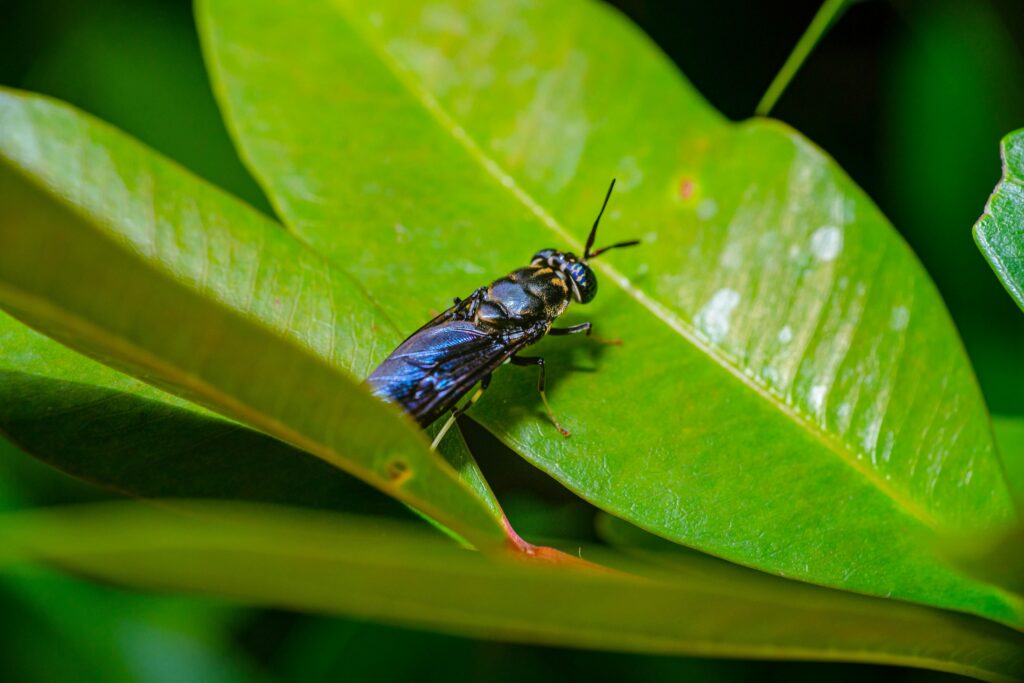
Solider flys decompose decaying matter of all kinds, when in their larva stage and are a great alternative to worm composting.
Supply the soldier flys with food and you can have compost instantly.
Soldier Flys
pros
Quick eating
Eats everything including citrus
Survive extreme heat and cold
Amazing at multiplying
Gives solid and liquid fertilizer
Can come free of charge
cons
Fast eaters in the warm months so keep a consistent flow of kitchen scraps
Birds and rodents will want to snack on the larva
Can become over populated
What are some other things to know?
They are not considered pest
Adults don’t have mouths so they don’t bite
Do not start seeds next to them or they will eat them
You can collect their droppings which is a liquid or solid
They can be fed to livestock (chickens, etc)
Probably not best for apartments (lots of flys)
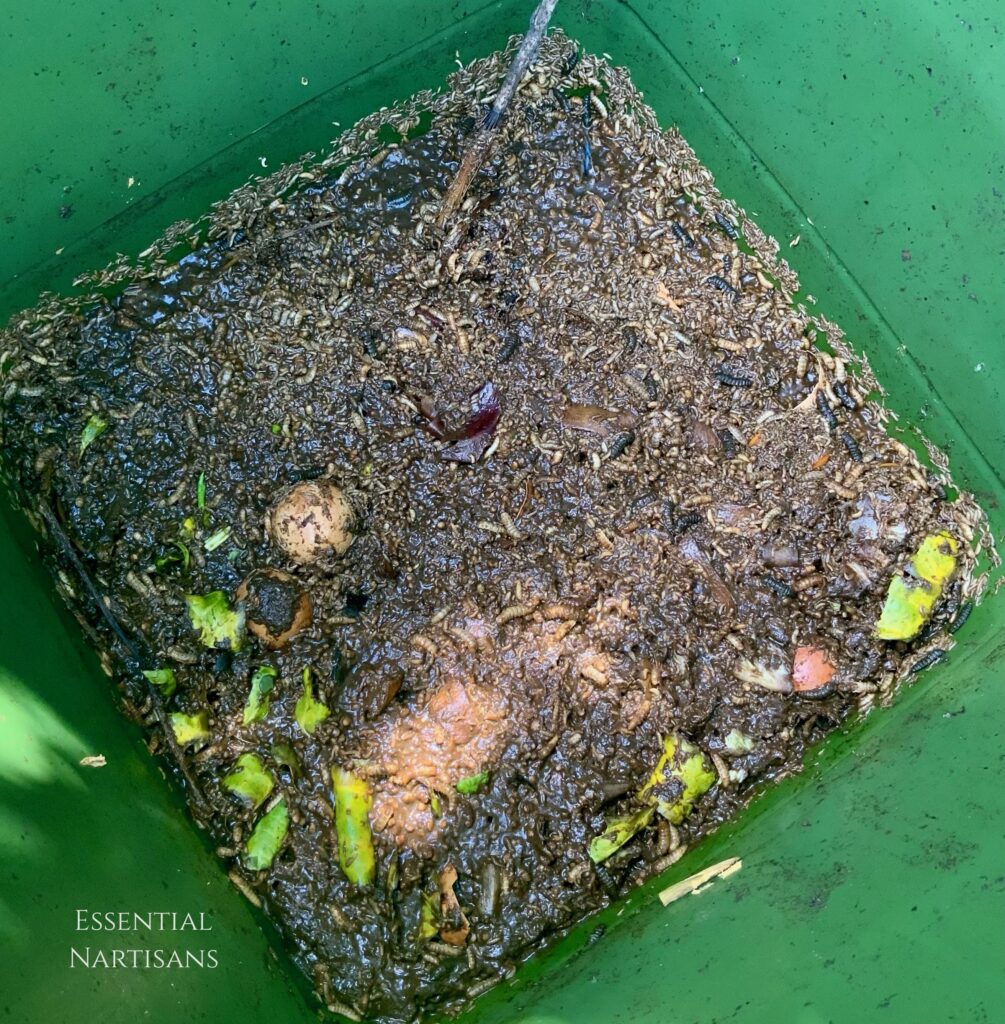
Highly populated compost bin fed the day before.
worms
Worms are great for indoor or patio composting, but worms will be happier and easier to care for if left to venture around the garden through in bed or in ground worm towers instead of compost bins or farm because they require such adequate care.
Nevertheless if your up to the task worm farming will be great for obtaining black gold.
Worms
pros
Store in your kitchen
Worm castings
Liquid fertilizer
Quiet
Self population regulation
Source of black gold
cons
Picky
Temperature sensitive
Slow Decomposers
Moisture sensitive
Requires strict attention
Want more information on worm farming? Here are more sources of information.
Chop and drop is what the name implies, you chop up plants and organic matter and drop it on the ground.
Chop and Drop
pros
Free mulch
Fertilizes over time
No slime mold
Easy
con
If there are seeds they spread
Chop and drop is cutting plant matter down into small pieces to use as a mulch and slow release fertilizer.
It feeds worms and gives them a soft cover, this creates a nice fertilizing humus over time.
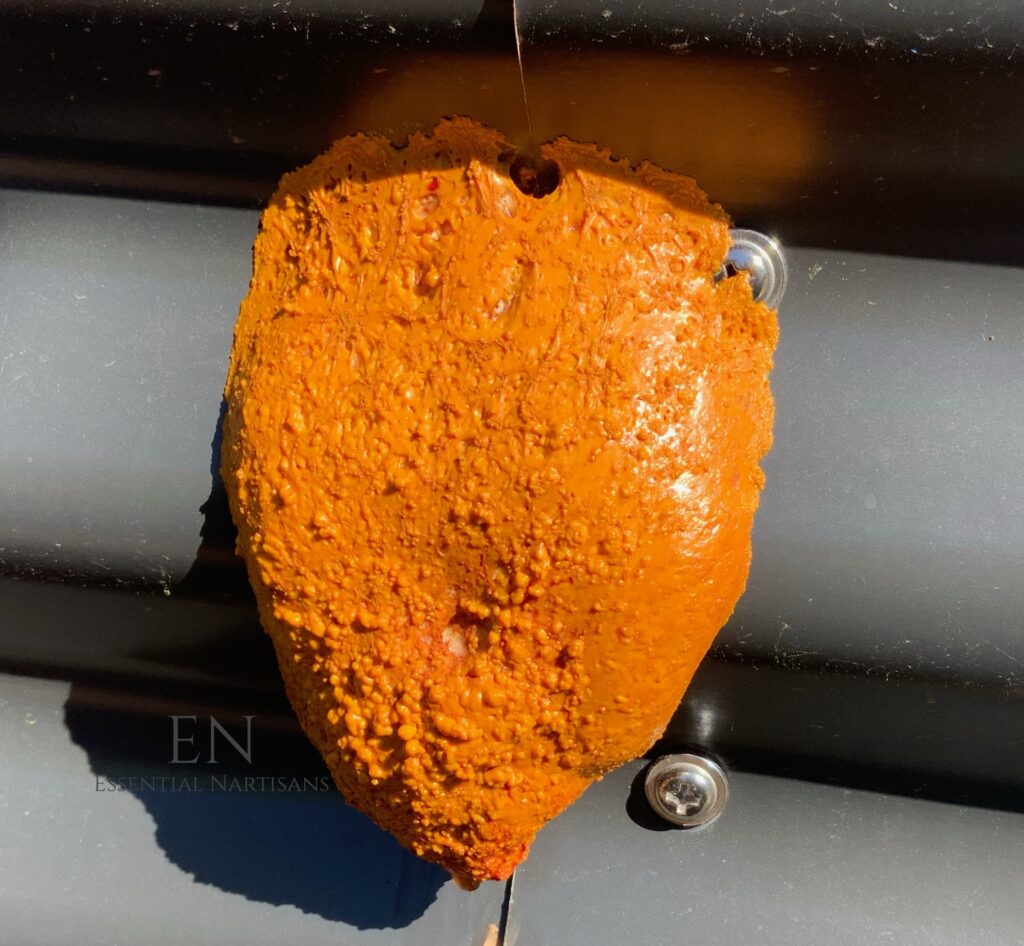
As a bonus, the chop and drop method doesn’t produce the slime molds that come from wood mulches.
Slime Mold
Slime Mold
Leaf mold (different from slime mold) works the same way as chop and drop.
You can either chop or crush up leaves and use them to mulch your garden beds or place them in a pile or container, wet them, then let them rot down into a humus you can then spread as a nutrient rich mulch.
This also will help to protect and grow mycelium.
Liquid Feeds
Liquid feeds come from anything organic that decomposes. Liquid feed is a great source of fertilization because it can be abundant and convenient.
Soak fruit and vegetable food scraps or garden plants in water for a few days to a week in a bucket or other container. Dilute with water in small increments first until you know how it will affect your plants.
To add beneficial organisms, use the liquid from your bokashi bin. It is acidic so dilute in water.
Make a worm or soldier fly bin where you can add a drip tray underneath and collect their liquid. It can be kept in plastic bottles or buckets. DO NOT use glass and or sealed containers, it will ferment and explode.
Manure
Manure is a great way to get nitrogen and phosphorus, and there are so many ways to get it.
Livestock. This type of manure is hot and needs to decompose before you use it in your garden or it will burn your plants. This is caused by uric acid and ammonia.
Rabbits. Their manure canbe used fresh in the garden because they don’t contain as much uric acid and ammonia.
Worms and soldier flys. I would say are the simplest and time effective creatures to get manure from but they do contain less nitrogen and phosphorus than larger animals.
Conclusion
There are so many natural things to use around us that we don’t have to use chemicals at all. However if you don’t have access to, or can’t use natural resources, then there are plenty of organic and healthy fertilizers you can buy as well.
To sum it all up, making gardening simple and natural again will not only heal the earth, it will improve our lives and our bodies as well.





You must be logged in to post a comment.